




X
Trustworthy Source
PubMed Central
Journal archive from the U.S. National Institutes of Health
Go to source
However, you should talk to your doctor who can help you find the treatment that is best for you based on your personal medical history.
Taking Action During an Attack
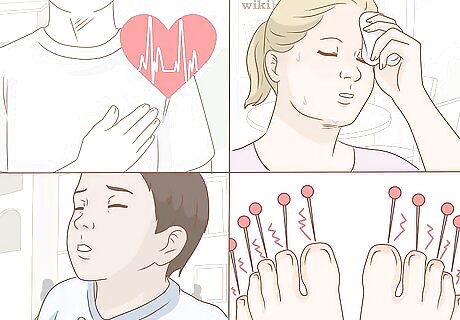
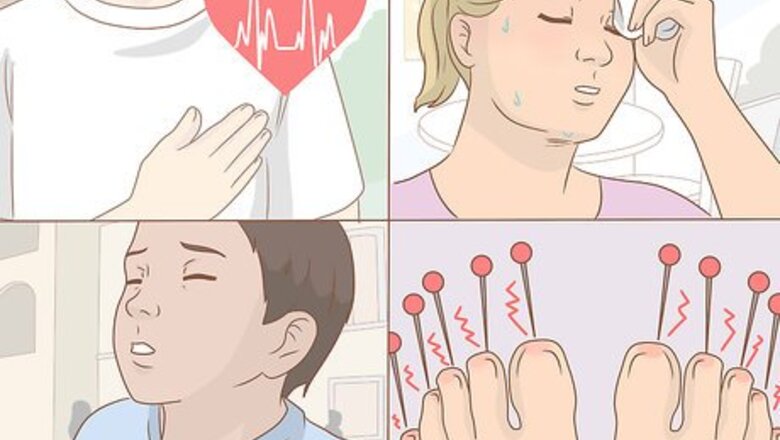
Recognize the symptoms. There are several symptoms of an anxiety attack, and each person has a unique feeling when an attack happens. In the middle of a panic attack, your body enters “fight or flight” mode. Since this response can't be sustained long-term, an attack generally fades after a few minutes. Nonetheless, some people experience repeated attacks that span hours. The most common symptoms of an attack are: Racing heart Feeling flushed or hot Debilitating terror Experiencing chest pains Having trouble breathing Experiencing “pins and needles” in the fingers or toes Thinking that you will die Feeling claustrophobic
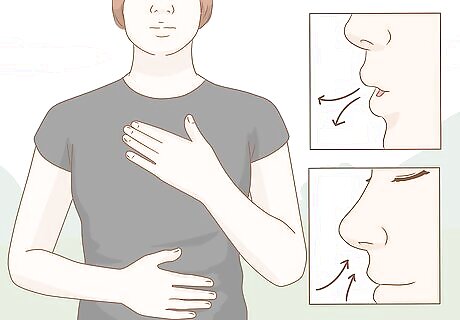
Breathe deeply. One of the common side effects of an attack is not being able to catch your breath. Therefore, mastering deep breathing can be one of your strongest weapons during an attack. Try "box breathing." Count to four for your inhale, hold for four at the top, count to four for your exhale, and then hold for four at the bottom. Try to control your breathing by placing one hand on your belly and the other on your chest. Exhale sharply and let your upper body fall into a relaxed state. Now, breathe in slowly through your nose for 4 counts. You should feel the hand on your belly moving outwards. Pause and hold the breath for 1 or 2 counts. Now, gradually release the air out through your mouth for 4 counts. Repeat the process for several minutes as the natural relaxation response comes into effect.
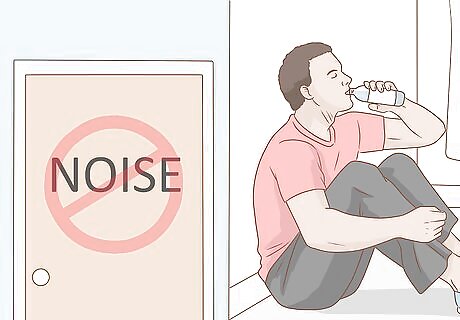
Try to find a quiet place. Frequently, panic attacks are set off by feeling overwhelmed in a large group of people. Go to a quiet room or corner where you can feel your back against a wall, grounding you. Sit down if you can, and drink some water. While getting away from your environment may help, you want to try your best to resume your usual activities as soon as possible. You can stop panic attacks that occur during any activity by learning relaxation and grounding techniques.
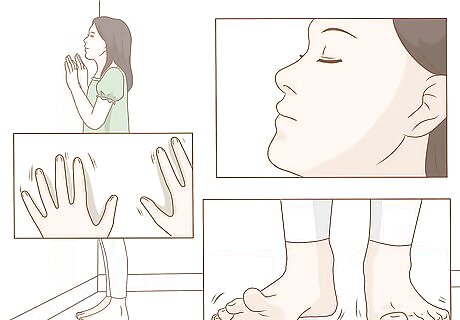
Reorient yourself to the environment. Derealization and/or depersonalization involve feeling as though you are disconnected from the surrounding environment or from your body respectively. Some people experience these sensations during anxiety attacks. Grounding techniques are an effective remedy for derealization and depersonalization. Connect with your reality by grounding yourself in what is tangible and pulling your attention away from panic. Attempt to close your mind off to one sense at a time while practicing deep, calming breathing. Stand up and feel your feet touching the ground. Only focus on how it feels to be standing, how your feet feel in your shoes or against the floor if barefoot. Then, rub your fingers along the wall. Think about how that feels. Notice how your hair feels up against your ear, or how your clothes feel on your body. Finally, listen to the noises around you. What sounds do you hear? Continue to breathe deeply as you connect with the different sensations.
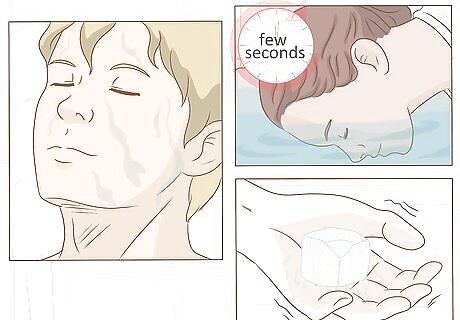
Fend off anxiety with water. Once your breathing has steadied, you might feel confident enough to go to a bathroom to wash up. If possible let the water run over your face or dip your face into the sink for a few seconds. The refreshing feeling can sometimes help calm you down. Another strategy for diverting your attention away from anxiety is holding an ice cube in the palm of your hand (covered with a paper towel if you like). Hold onto the cube for as long as you can; then, switch hands. Your attention becomes focused on the discomfort of the cold ice and less on your panic symptoms.
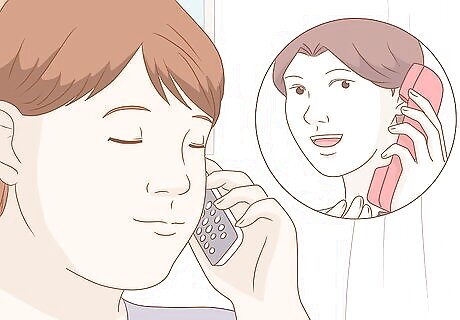
Talk to a friend or someone you trust. Sometimes they can help you talk through your feelings; sometimes just having someone to talk to can keep your mind preoccupied and get you through a panic attack.
Challenging Your Thinking
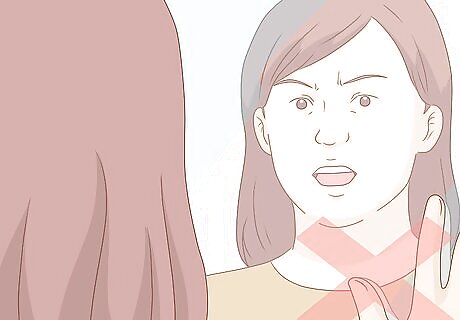
Avoid criticizing yourself. Many people who experience panic have a tendency to beat themselves up or criticize themselves. Try to go easy on yourself in the midst of an attack. Getting angry or upset without yourself for not being strong enough or succumbing to an attack won't help. Replace self-criticism with compassion. Be gentle with yourself as you would a friend. Instead of judging yourself for not snapping out of it, hug yourself and inwardly tell yourself to take the time you need to calm down and relax. If you are guilty of being hard on yourself, think about the statistics. Having an anxiety attack does not make you weak or crazy. More than 6 million people in America struggle with panic disorder. What's more, if you are female, you are twice as likely to be afflicted by this condition. Instead of having a negative thought like, "I wish my mind wasn't like this," tell yourself, "Okay, this is my nervous system, now it's just getting a little overactive." After all, your body is designed to activate your nervous system to keep you safe.
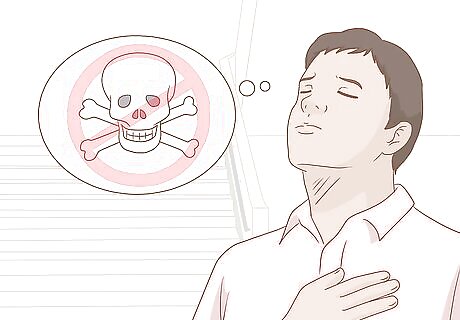
Remind yourself that you have survived before. A common thought during a panic attack is that you are going to die. Fear and dread hold your common sense captive and all you can think about is escaping this feeling. It may be helpful to remind yourself that you have lived through an attack before. You are a survivor. All you have to do is continue to control your breathing and eventually the attack will pass.
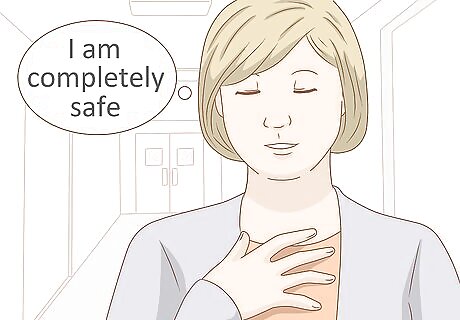
Talk yourself back to a calm state. Positive self-talk is an incredibly useful strategy for overcoming panic during an attack. In addition, regularly using this form of thinking can also minimize the level of anxiety you feel throughout the day. Tell yourself the following: ”I am completely safe.” ”I am not in danger.” ”This feeling will pass.” ”I am getting calmer by the minute.”
Seeking Professional Treatment
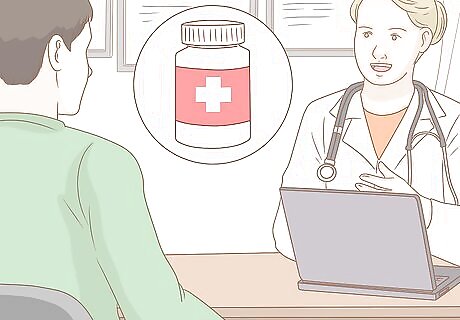
See a psychiatrist for medications to ease anxiety attacks. Doctors generally prescribe anti-anxiety and antidepressant medication to individuals who suffer from panic disorder. These medications are extremely powerful as many reduce the symptoms of anxiety attacks immediately. Anti-anxiety medications, such as benzodiazepines and tranquilizers, function by reducing the excess activity in the brain. Depending on the dosage, these drugs may provide relief from anxiety within thirty minutes to an hour after ingestion. They also come with side effects like depression, drowsiness, impaired thinking, and dizziness among others. Antidepressants have been found to treat the symptoms of anxiety, too. However, these medications are often prescribed to treat chronic anxiety and will not be helpful during acute anxiety attacks. You would take them to prevent attacks rather than to relieve one.
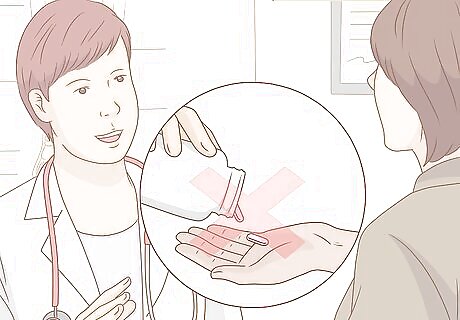
Talk to your doctor about how to use your medications. Follow the instructions carefully, if your doctor has prescribed medication. Many anti-anxiety medications have addictive qualities; taking more than prescribed can be dangerous. And, remember, never share your prescriptions medications with other people.
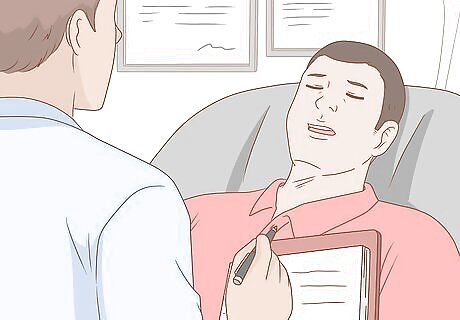
Participate in therapy. Most people find that panic disorder is treated effectively with a regimen of both medication and psychotherapy. A research-backed and long-lasting therapeutic solution, for panic disorder and anxiety is cognitive behavioral therapy. Cognitive behavioral therapy involves identifying the sources of fear, recognizing faulty thinking patterns, and developing healthy coping mechanisms to life stressors. You may see positive results after approximately three to four months, if not sooner, of participating in this approach.
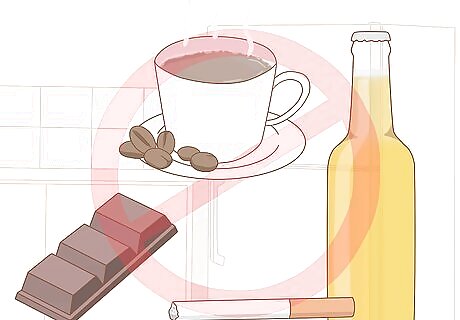
Avoid stimulants. If you are prone to panic attacks, you will do well not to consume caffeinated products such as tea, coffee, and even chocolate. If you smoke, you may want to quit since nicotine is a stimulant as well. Alcohol, in small doses, can even serve as a stimulant. These chemicals often worsen anxiety by exciting your central nervous system and generating energy that creates panic.
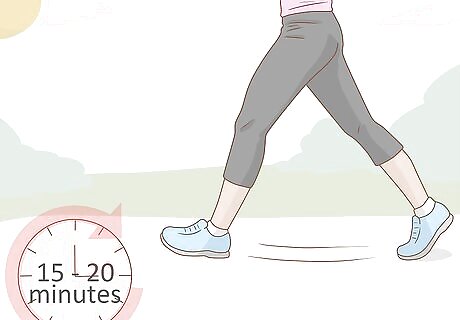
Exercise regularly. When you get your body moving, even if only for a 10-minute walk, you may find your mood is vastly improved. Research has found that, for some people, aerobic exercise can elevate your mood, decrease tension, and improve sleep and self-esteem. Data suggests that frequency is more important than how long you exercise, so instead of going for a marathon gym session over the weekend, try to work in a 15–20 minute walk every day.








Comments
0 comment