





Gaining the Necessary Education

Take a handful of online classes to see if project management suits you. If you’re new to the field, you may want to learn a few things about project management and information technology (IT) before deciding that’s what your career will be. A large number of online schools will let you sign up for 1 class at a time, and offer a large number of courses related to project management. Check out schools including: Alison, at: https://alison.com/courses?query=project+management. Coursera, at: https://www.coursera.org/courses?query=project%20management. Udemy, at: https://www.udemy.com/courses/business/project-management/?search-query=project+management.

Study project management or a related field at the college level. If you’re just getting out of high school (or have graduated in the last several years), you’re in a great part of your life to get as much project-management education as possible. Having a BA in project management, computer science, or IT looks great on your resume, and will position you high in the running for any project management job you apply for. Most universities offer undergrad programs in project management. It wouldn’t hurt to take 1–2 IT classes on the side, too, to better qualify yourself to be specifically an IT project manager. While most IT project management jobs don’t officially require a BA in the field, it’s strongly recommended that you get the degree.

Take 2–3 college-level classes to learn about project management. If you aren’t a college student, you will still need some relevant education to land a project manager job within the IT field. Enroll at a local community college that offers project management courses, and take a couple of courses. Focus on taking courses that build up areas that currently are not your strengths. For example, if you haven’t done much work with business systems analysis or cost and scheduling control, take courses in those areas. The project management certifications require that you have at least 35 hours of education, and community college coursework is a great way to earn those hours!
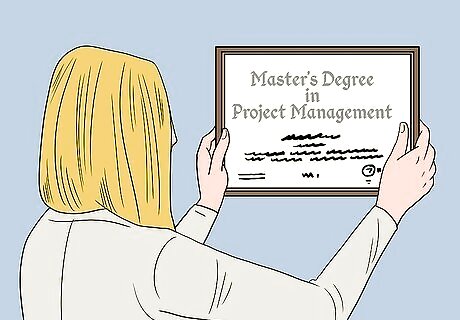
Earn an MBA in the field to improve your odds of being hired. Project management jobs within the IT field are competitive, and earning a master’s in project management is a great way to make yourself into an extremely qualified candidate. Many universities and colleges offer both online and in-seat MBA degrees. Check out degrees at schools like Capella University, North Central University, Georgetown University, and NYU. Master’s degrees in project management usually involve 2 years of study beyond a bachelor’s degree.
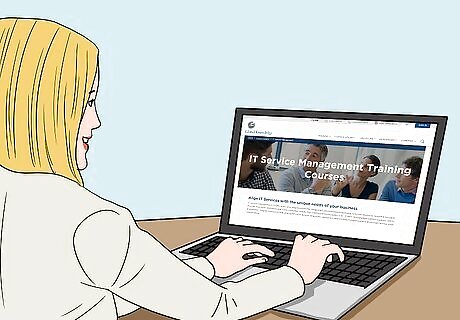
Take a few training courses to make yourself more hirable. The IT project management field is competitive. Even with a degree, coursework, and certification under your belt, you may find that you need extra padding your resume to land the job you want. Training courses are a great way to make yourself look better on paper and to enhance your workplace skills. Take training in IT Service Management (ITSM) or IT Information Library (ITIL). Many free online schools offer IT training courses. For example, check out the free ITSM course at Global Knowledge: https://www.globalknowledge.com/us-en/training/course-catalog/topics/it-service-management/. Or, look into a free ITSM course through Learning Tree International: https://www.learningtree.com/training-directory/itsm-certification-training/.
Earning a Certification
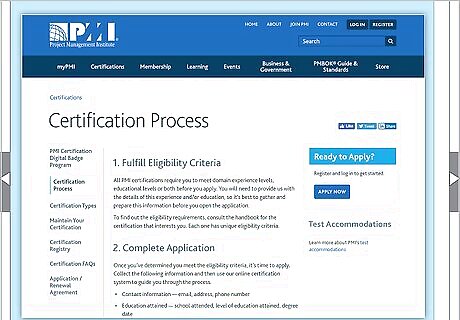
Earn a PMP certification if you’re an experienced project manager. If you’ve worked as a project manager in any field—not just in IT—you can apply for this certification as long as you have at least 4,500 hours of management experience. The Project Management Professional (PMP) certification is regarded as the most prestigious in the field. It’s also recognized internationally, which is a nice perk if you’re planning to look for work as a project manager abroad. The PMP certificate is offered through the Project Management Institute (PMI). Learn more about the certification process and apply online at: https://www.pmi.org/certifications.
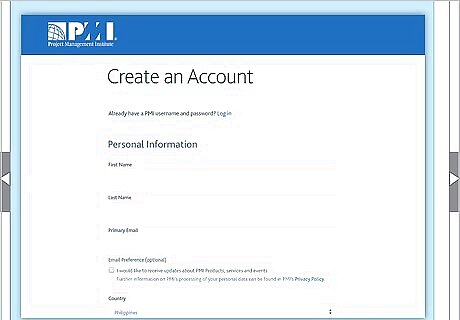
Work on the CAPM certification if you’re new to project management. If you have never worked as a project manager before, The Certified Associate in Project Management (CAPM) certificate is the way to go. Like the PMP, this certification is recognized internationally. You only need a high-school diploma to qualify, and—as with the PMP certification—will need to pass an exam to receive the certificate. You can take the exam either online or at a testing center. The CAPM is also offered through the PMI. Begin your application online at: https://www.pmi.org/account-registration.

Maintain your certification through exams or development units. In order for the PMI to continue your certification, you must work to maintain the certificate. If you received a CAPM certificate, you’ll need to re-take (and pass) the exam every 5 years. If you received a PMP certification, the PMI requires you to earn 60 professional-development units (PDUs) annually. You can earn PDUs by giving certification-related presentations, volunteering with certain organizations, or taking courses.
Getting a Job
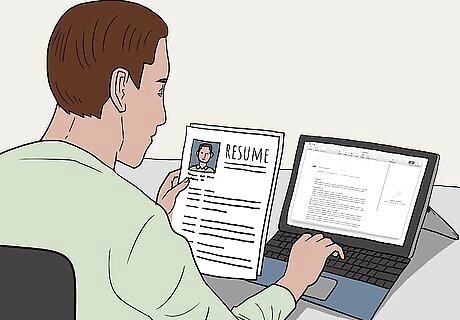
Customize your resume to highlight your project management skills. When you’re tailoring your resume to send to project-management positions, make sure you highlight the successes you’ve had using verbal and written communication at your previous jobs. Include information about how you’ve monitored and guided coworkers and other team members, since that’s a major component of project management. Also make sure to present yourself as someone who is capable of initiating projects and who has seen projects through to completion. The term “project” can be vague in this context. Think of a project as a months-long development of software (or another IT-related product) that involves multiple co-workers, a set budget, and coordination with clients.

Apply for project management jobs with IT companies or departments. Project management is a growing field, and many tech companies in particular are looking to hire well-educated, certified project managers. If you’re already in a related field, ask your co-workers and other professional networking contacts if they know of any IT departments hiring. Fill out the online application, send in your resume and cover letter, and you’ll be on your way! You can also find a wealth of job listings online. Check sites like Monster, Indeed, and LinkedIn for IT project-management positions that are currently being filled.

Talk up your leadership and organizational skills in an interview. If you’re called in for an interview, position yourself as someone whose professional strengths and personality is well-suited for a project-management role. Explain 2 or 3 past workplace situations in which you’ve had to resolve disputes between co-workers, keep multiple workers focused on different aspects of a large task, or lead and inspire your subordinates to do their best work. Try saying something like, “Although I’ve never worked as a project manager before, I have successfully overseen long-term software development projects.” Or you could say, “In previous jobs, I always excelled at keeping track of multiple deadlines and organized my subordinates to meet those deadlines.” If you have IT-related work experience from past jobs, talk about that in the interview as well.











Comments
0 comment